
Washington County Court Records After Arrest
Washington County's arrest-to-court path is better documented than its jail roster. The county courts page says all felony cases are first heard in Justice Court for initial appearance and filing of affidavit. It also says Justice Court judges hold court sessions at the jail three times each week to protect each person's right to an initial appearance within three days of arrest. That is the first local court-record point after a jail arrest.
The booking or jail docket record answers custody questions, while the court record answers case questions. For custody and booking details, use jail inmate records. For booking photos, use jail mugshots. Court records after arrest track the accusation and the court path: affidavit, complaint, information, indictment, bond, warrants, hearing settings, dismissal, plea, trial, and sentence.
Find Washington County Court Records
Start with the local court that fits the case stage. Justice Court handles early felony appearances, affidavits, DUIs, traffic tickets from the State Highway Patrol and sheriff, and county ordinance matters. The Circuit Clerk receives and files indictments, motions, and papers in Circuit and County Court criminal cases. The Mississippi Delta District Attorney page posts Washington County criminal docket links by judge and week.
- For a new jail arrest, call or visit Washington County Justice Court for initial appearance and affidavit context.
- For a filed felony or County Court criminal case, use the Circuit Clerk's office and ask for the case number if known.
- Check the Washington County DA docket page for posted hearing and trial settings.
- Use Mississippi Electronic Courts and the MEC registration portal where account access is needed.
- Compare the filed court charges with the jail or police record because booking language can differ from prosecutor-filed charges.
Mississippi Electronic Courts provides statewide case-system information and helpdesk access for users who need court-file lookup beyond a posted docket.
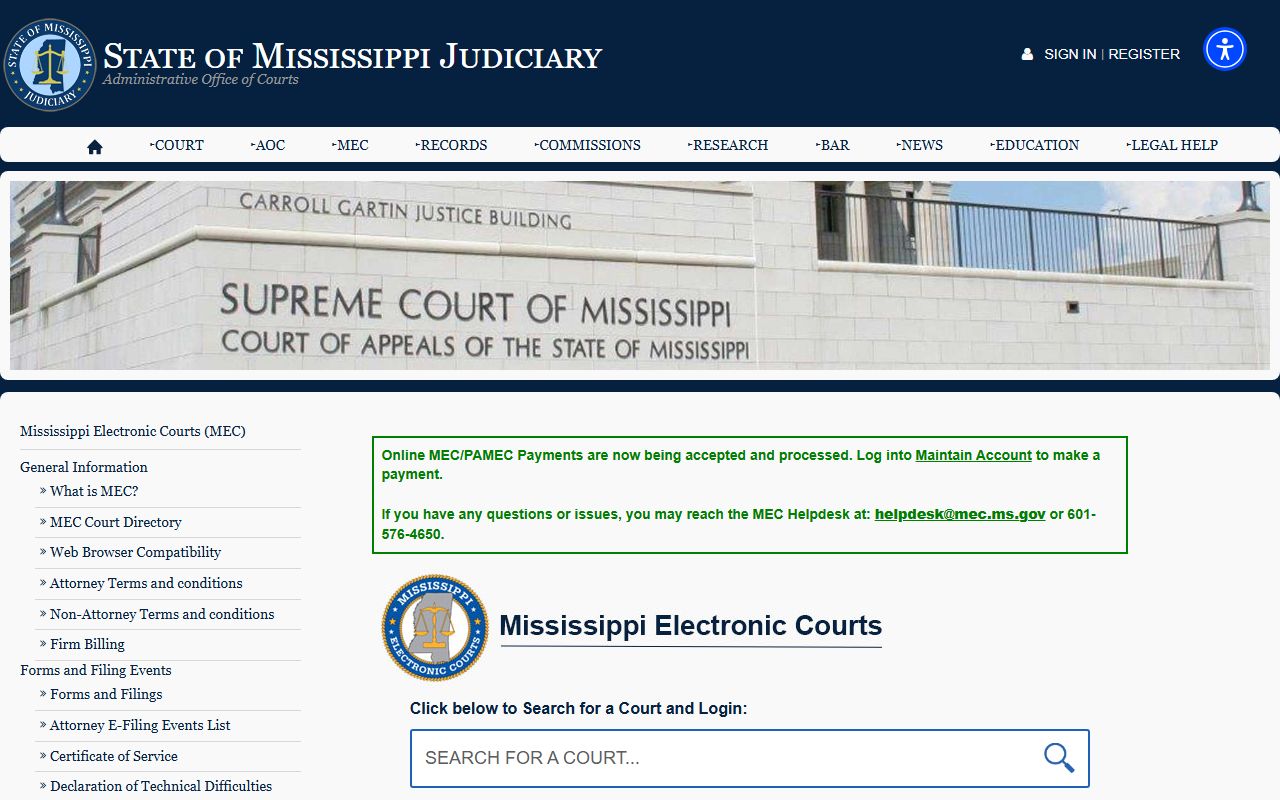
The MEC screenshot fits the court-records workflow because account-based court access may be needed after the local first-appearance stage.
Charges Filed After an Arrest
The District Attorney judicial-process page explains that felony defendants appear at first appearance, charges are reviewed, counsel is addressed, and no plea is entered at that point unless the defendant wants to plead guilty or waives indictment with an attorney present. It also emphasizes that in Mississippi only a grand jury has authority to indict someone for a felony and require trial on charges alleged in an affidavit and indictment.
| Document | Who Uses It | Washington County Role |
|---|---|---|
| Affidavit or complaint | Officer, complainant, or prosecutor | Common early document in Justice Court after arrest. |
| Information | Prosecutor where allowed | Can be used when indictment is waived or procedure permits. |
| Indictment | Grand jury | Formal felony accusation for Circuit Court trial or plea path. |
The DA judicial-process page shows the local prosecution sequence from arrest through first appearance, grand jury, trial, and sentencing.
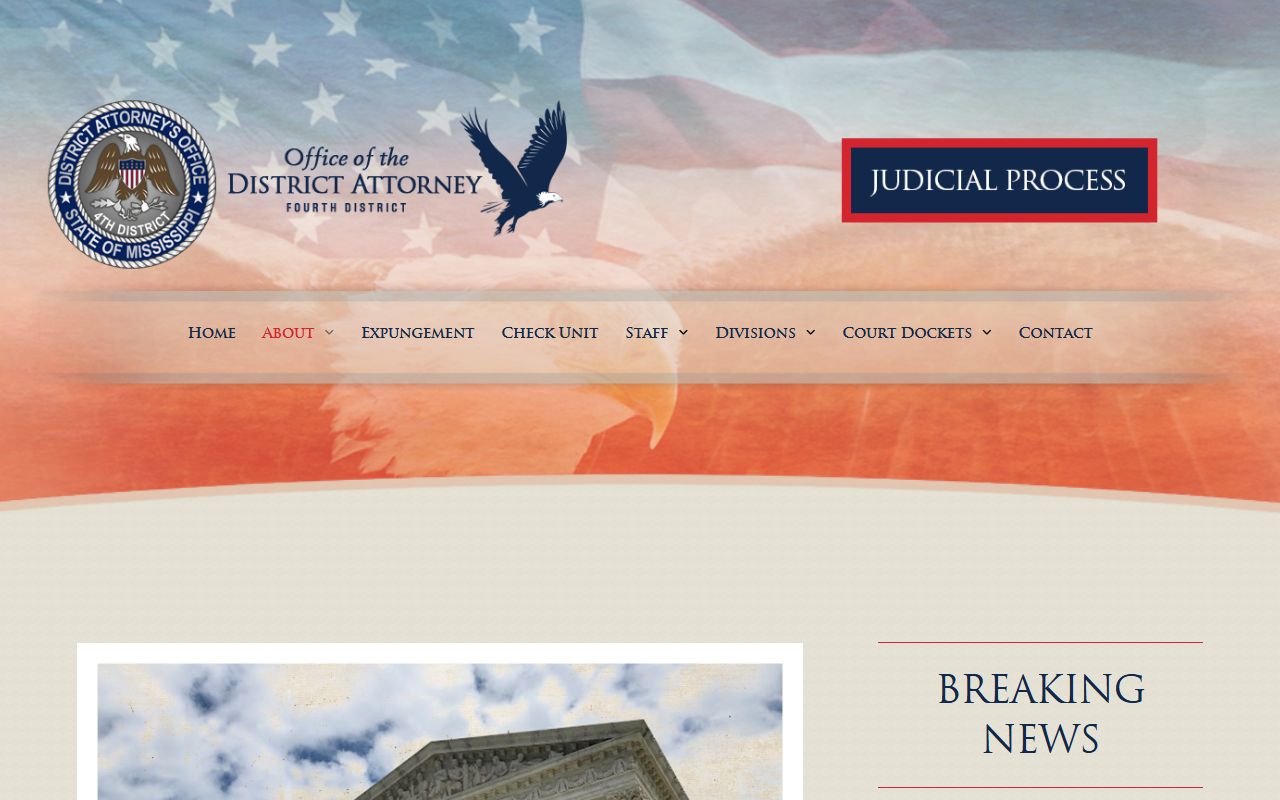
That source is useful because it explains why a booking charge and a later court charge are not always identical.
Washington County Charge Status
Charges can change after a jail arrest. A booking record may use the arresting agency's first language. The prosecutor may later file different charges, reduce a charge, add a count, dismiss a count, or present the case to a grand jury. A court record should be read by status and date, not only by the first charge name found after the arrest.
| Status | What It Means |
|---|---|
| Pending | The court case or charge remains open. |
| Amended or reduced | The filed charge changed from the earlier wording or level. |
| Dismissed | The court dismissed the charge or case. |
| Nolle prosequi | The prosecutor declined or dropped prosecution on that charge. |
| Convicted | A guilty plea or verdict produced a conviction. |
Bond Records After Arrest
Bond in Washington County connects the jail record with the court record. The county courts page says County Court judges may set bond and preside over preliminary hearings, while Justice Court handles first appearances and affidavit filing for felony cases. The research did not locate a public jail bond desk policy, kiosk vendor, accepted payment list, or bond desk hours. Verify the court and facility before paying anyone.
| Bond Type | How It Works |
|---|---|
| Cash bond | Money paid when the court allows release by cash bond. |
| Surety bond | A licensed bonding company posts bond where the court allows it. |
| Personal recognizance | Release on a promise and court conditions without full cash payment. |
| No-bond hold | Custody cannot be ended by payment alone. |
| Detainer or agency hold | Another agency's hold may block release even after local bond. |
Warrants and Court Records
No official Washington County online active-warrant search was located. Warrant questions should be handled through the issuing court, sheriff, facility, Circuit Clerk, Greenville Police, and court docket tools. County Court judges may issue search warrants, and Justice Court handles early criminal matters. A bench warrant may appear after a missed court date, while an arrest warrant may start the custody process.
- Call the sheriff at 662-334-4523 for sheriff warrant or custody questions.
- Call the facility at 662-537-2000 for current holds or booking status.
- Use Justice Court for Justice Court warrants, DUIs, ordinances, and first appearances.
- Use the Circuit Clerk for filed Circuit or County Court criminal records.
- Use Greenville Police records for Greenville Police arrest reports or city police records.
Charges vs Convictions
An arrest charge is an accusation or holding reason. A conviction is a court outcome after a plea or verdict. This difference is central when reading Washington County court records after a jail arrest. The DA judicial process page notes that criminal trial jurors must find guilt beyond a reasonable doubt, and sentencing is handled by Circuit Court judges in criminal matters.
| Charge | Conviction | |
|---|---|---|
| Stage | Accusation after arrest or filing. | Court outcome after plea or trial. |
| Proof level | Probable cause or filing basis. | Beyond a reasonable doubt for trial conviction. |
| Record meaning | Shows what was alleged. | Shows the final criminal finding. |
Sealed and Expunged Records
Mississippi expunction is governed mainly by Miss. Code Section 99-19-71. The DA expungement page gives local summary context for eligibility, but an order from a court controls the result. Expunction should not be described as an automatic removal from all websites or from every third-party copy of a record.
| Sealed | Expunged | |
|---|---|---|
| Public view | Hidden or restricted from ordinary public access. | Removed or treated under the expunction order. |
| Legal source | Court rule, order, or privacy law. | Mississippi expunction statute and court order. |
| Common trigger | Juvenile, protected, or restricted case material. | Eligible dismissed, dropped, no-disposition, not-guilty, misdemeanor, or specified felony outcomes. |
Criminal History Records
A court-record lookup is not the same as a Mississippi criminal-history background check. The DPS Criminal Information Center is the state criminal-history repository authority, and the DPS name-based background check process is separate from ordinary public-records requests. DPS public-records FAQs state that criminal histories are not public records and must use the online background-check process.
Important: Do not use casual custody or court lookup pages for FCRA-covered employment, housing, credit, or insurance screening.
Restricted Records After Arrest
Some Washington County court records after arrest may be limited by law or court order. Juvenile records, sealed records, expunged records, protected witness information, ongoing investigations, and redacted personal details may not appear in ordinary public access. Mississippi's Public Records Act allows access to nonexempt records, but it also allows redaction or withholding where another law protects the information.